Slime moulds solve problem.

Very interesting study in which slime moulds are used to determine efficient maps among locations. See here!

Bacteria flashing in sync

From New Scientist:

Glowing bacteria that flash on and off together are pointing the way towards implants made of engineered cells that would deliver precise doses of drugs or hormones at specific times of the day.

The bacteria have been engineered to fluoresce in synchronised bursts to produce waves of luminescence – but the researchers were not after a biological light show. The feat is proof in principle that the activity of cells can be artificially coordinated, so that they no longer work in isolation.

(Read the rest of the story)


What’s wrong with a biological light show? I think it would be interesting!

Isaac Newton said ‘Let there be Light’

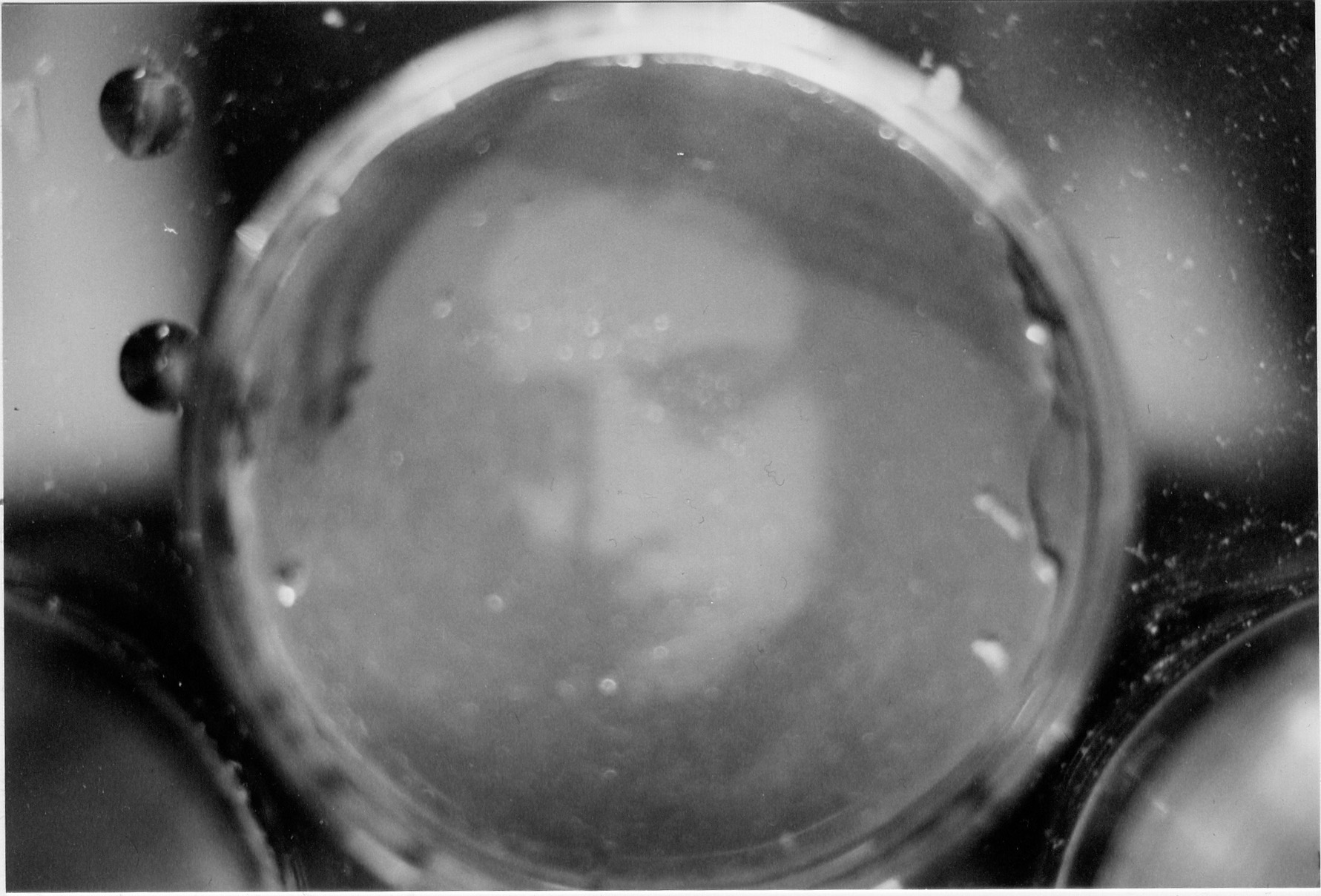
Image of Newton in Petri dish.jpg (428 KB)

Bacterial image of Isaac Newton photosynthetically grown on the glass surface of the bottom of a petri dish using aqueous media.
The Photosynthetic bacteria were cultivated and isolated in the artist’s studio laboratory, from winogradsky columns made up from garden samples of organic materials.
The image used was taken from the NPG’s Godrey Kneller portrait of Newton, and by using transparent acetate masks with lightboxes, the image was grown in 21 hours.
This post was submitted by Roy Amiss.

New Scientist gallery.

New Scientist has just posted a gallery of some of the microbial art images on their webpage. Click here to see which ones they selected.

Physarum UK

physarum-big.jpg (628 KB)

Image created as a logo for Artificial Life XI: The Eleventh International Conference on the Simulation and Synthesis of Living Systems (http://alifexi.alife.org/)

From the introduction to the Proceedings:

“We chose to promote the conference with an image that is in some sense itself an example of artificial life: a real organism artificially encouraged to adopt the shape of the host country (plus Ireland). The cover of this proceedings volume features a photograph of a single-cell creature, the slime mould Physarum polycephalum, that was grown over a period of between twelve and twenty-four hours in a petri dish. While we have tidied the image up a little, it is essentially undoctored. The slime mould was grown by Soichiro Tsuda, and photographed by Soichiro, Nic Geard and Seth Bullock. The initial idea was proposed by Richard Watson during a particularly creative lunch.

In order to achieve the shot, we used a piece of acetate with an appropriately shaped hole as a template, and grew the slime mould across this area. The network of microtubules that you can see forms spontaneously as the creature grows, and reflects the self-organised system of nutrient transport that the slime mould uses. Since Physarum does not enjoy acetate as a habitat, it is relatively easy to remove the template and leave behind the organism, which has adapted to the niche it was offered by creating a living map of the the United Kingdom (and Ireland).”

This post was submitted by Nicholas Geard.

Kaleidoscope

UTI-agar.png (1 MB)

Having fun with GIMP and UTI-agar.png (876 KB)

Faecal samples have been plated on chromogenic UTI-agar. The large pink colonies are E. coli, the small blue are enterococci and the clear slimy ones are Pseudomonas. The colours have been manipulated using the freeware GIMP, and then a small square of the large picture have been cut out, multiplied and re-assembled like in a kaleidoscope.

This post was submitted by Maria Tarnberg.

E. coli O157:H7 art

Artistic EDL933.jpg (99 KB)

Popeye Cording.jpg (102 KB)

ropy tangles.jpg (543 KB)

The first two images show the changes that occur when E. coli O157:H7 strains are exposed to sublethal concentrations of the antibiotic ciprofloxacin. Ciprofloxacin induces cell elongation, also called filamentation. In addition, the cipro causes the bacteria to become more “sticky” and they line up forming interesting patterns, almost woven like a textile. Bacteria were stained with acridine orange stain and photographed by fluorescence at 1000 X magnification.

The third image shows EHEC secreted proteins that formed into rope-like structures as the sample dried out slowly under the cover slip. An artifact turned into art work!

This post was submitted by John K. Crane, MD, PhD.

Biopaintings

IMG_1138.JPG (688 KB)

347b.JPG (36 KB)

537b.JPG (34 KB)

591b.JPG (25 KB)

DSC_0521.JPG (723 KB)

Patrícia Noronha is a visual artist and has a PhD in Biology. Actually she has a post-Doc grant in artistic studies, from FCT, and uses a microbiology laboratory as na art studio at Instituto de Tecnologia Química e Biológica (ITQB), from Universidade Nova de Lisboa. She works with microbial pigments and biofilms as an artistic tool.

Biopaintings were obtained by controlling the growth of yeast cells on paper and ensuring the stability of the final results. The biopaintings result from the artist´s observation of the interactions between the cells and from the experimentation with their evolving patterns. The often unexpected results are part of the creative process and suggest new ways to be explored. The last image is a live installation at Fundação Calouste Gulbenkian (FCG), Lisbon 2009.

This post was submitted by Patrícia Noronha.

New! Contribute your microbial art

I am experimenting with a feature to allow visitors to submit their own microbial art. This is still in the test phase, so bear with me. If you have some art to share, feel free to submit it — note that this is fully moderated, and that you should only handle microbes with proper training and in a safe lab environment.

More galleries available

Three outstanding new galleries have been added:

Dr. James Shapiro
Susan Boafo
Bioglyphs

And don’t forget to check out the other artwork under More art.